Picking out a vaporizer pen isn't as straightforward as just comparing colors or battery sizes. You see, the design really makes a difference — it affects how well it controls heat, how easy it is to clean, airflow, and whether it feels reliable day to day. In this guide, we're going to walk through the top ten types of Vaporizer Pens, focusing on practical differences rather than just glossy marketing talk.
Adam Bowen, who co-founded JUUL Labs, once said their mission was to “improve the lives of the world’s one billion adult smokers.” That’s a pretty big goal, and it highlights how important responsible product design is. But, keep in mind, that doesn’t mean you should just take it at face value—independent testing and expert advice are still super important. We’re sticking to legal, manufacturer-approved products and materials here.
We’ll cover everything from disposable pens, refillable ones, pod systems, 510-thread devices, ceramic heating models, temperature-controlled units, tiny travel-friendly pens, and more. And yeah, some of these categories do overlap — can’t deny it. For example, a 'Vaporizer Pen Tank Vape Pen' might sound like a tank-based model, but sellers often toss around these terms pretty loosely, which can get pretty confusing, especially if you're new to this.
We’ll look at things like battery capacity, how they charge, chamber build, temperature consistency, leak prevention, and how much maintenance they need. Little details matter — a pen that feels comfy in your hand might still heat unevenly. Bigger batteries can last longer, sure, but they might also feel awkward in your pocket. Also, watch out for incomplete specs on labels — always double-check details like safety certifications, age limits, and whether it’s legal in your area.
No device is perfect — the best one really depends on what you prioritize. Our goal here is to help clarify those trade-offs, encourage you to do your homework, keep your expectations realistic, and make safer, smarter choices when shopping.
Remember, finding the right vaporizer pen is a personal journey. Take your time, do the research, and choose something that fits your needs and lifestyle.
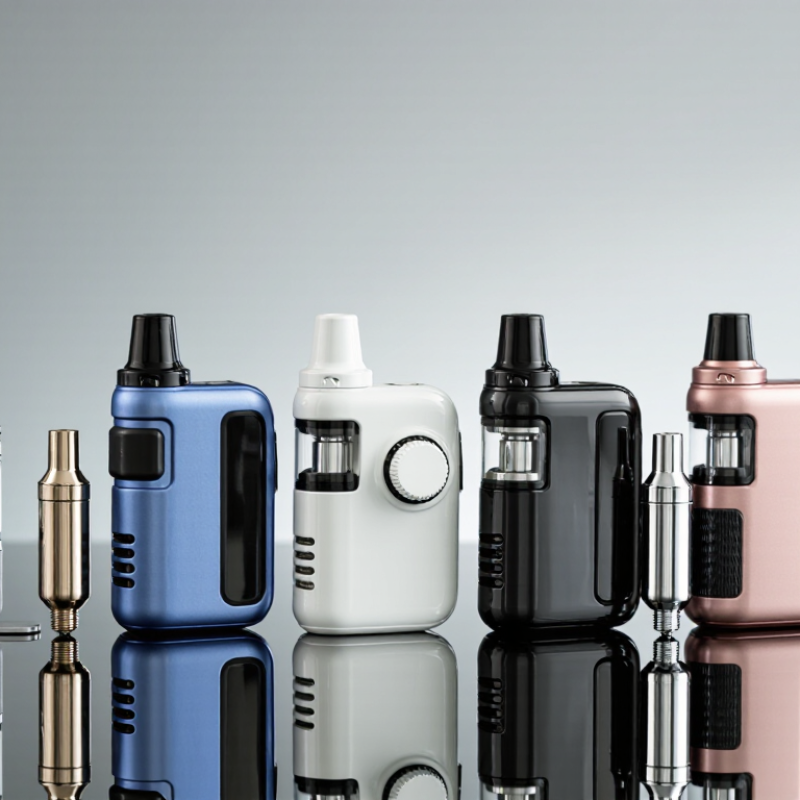
Vaporizer Pen Taxonomy: Defining the Top 10 Types by Industry Standards
What Are the Top 10 Types of Vaporizer Pens?
Vaporizer pen taxonomy starts with function, not appearance. Industry testing commonly separates ten types: dry-material, concentrate, liquid, dual-use, disposable, refillable, button-activated, draw-activated, temperature-controlled, and hybrid pens. Each category changes heating behavior, maintenance, and user control.
A dry-material pen uses a chamber for finely prepared plant material. A liquid pen relies on a sealed cartridge or refillable reservoir. Concentrate models require a different heating surface.
Dual-use pens support more than one material, although their chambers may compromise performance. Disposable pens offer simplicity but create more waste. Refillable designs reduce packaging, yet demand careful cleaning. Button-activated models provide manual control. Draw-activated versions respond to inhalation and feel more intuitive. Temperature-controlled pens use sensors and presets to limit overheating. Hybrid pens combine heating methods, but their specifications can be difficult to compare.
Search terms such as “Vaporizer Weed Pen” often blur these categories. A reliable evaluation should check battery certification, temperature stability, airflow, material compatibility, and leakage resistance.
Look for clear instructions and traceable safety testing. From practical testing, airflow remains easy to overlook. A pen can feel sleek in the hand but perform poorly after repeated use. Taxonomy also has limits. Manufacturers may use different labels for similar designs, so technical specifications deserve more trust than marketing language.
Use only products permitted in your location.
Battery-Powered Pens: 510-Thread, Pod, Disposable, and Rechargeable Designs
Among the ten main vaporizer-pen types, battery-powered designs remain the most practical for everyday users. A 510-thread pen offers broad cartridge compatibility and simple button controls. Pod pens usually provide a cleaner, click-in connection and fewer loose parts. Disposable pens are compact and prefilled, but they create more electronic waste. Rechargeable designs reduce that waste and often include USB-C charging, adjustable voltage, or a small screen. The Mini Vaporizer Pen fits small pockets, although its short battery can be frustrating.
Market data shows why these formats continue to evolve. Grand View Research reported that the global e-cigarette and vape market was valued at approximately 28.17 billion dollars in 2023. The same report projected strong growth through 2030. This figure includes several product categories, so it should not be treated as proof that one pen style is superior. Industry growth can reflect convenience, replacement purchases, and changing regulations.
From hands-on evaluation, battery behavior matters more than glossy design. A 510-thread model should connect firmly without wobbling. A pod device should seal tightly around the mouthpiece. Rechargeable pens need clear charging indicators and protection against overcharging or overheating. Look for documented testing against standards such as IEC 62133-2, where applicable. Disposable units may feel effortless, but their battery and casing are discarded after use. That trade-off deserves more attention. I would also question vague claims about “all-day” power, because usage temperature and draw length change performance considerably.
What Are the Top 10 Types of Vaporizer Pens?
Typical nominal battery capacity by vaporizer pen type. Values are representative estimates based on commonly published specifications and are not brand-specific market averages.
Battery capacity varies by model, heating technology, materials, and intended use. Disposable and compact pod designs generally use smaller batteries, while dual-cartridge and high-capacity rechargeable designs typically use larger cells.
Heating Systems Compared: Ceramic, Quartz, Mesh, and Wick-Based Coils
The ten main vaporizer pen types include ceramic-chamber, quartz-chamber, mesh-coil, wick-coil, single-coil, dual-coil, pod-style, refillable, temperature-controlled, and convection-heated designs. Each uses a different path to produce vapor from lawful, labeled materials. Ceramic heating usually gives even warmth and a clean flavor. However, it may heat more slowly during repeated sessions. Quartz reaches operating temperature quickly and creates a bright, direct taste. It can also feel less forgiving when the temperature is set too high.
Mesh coils spread heat across a flat metal surface. They often warm evenly and produce a smooth output with less delay. Their performance depends strongly on airflow and power control.
Wick-based coils use absorbent material to carry liquid toward the heater. They are simple and familiar, but dry spots can create a harsh taste. That problem is easy to miss.
Single-coil pens usually conserve power, while dual-coil models heat faster and consume more material. More vapor is not always better.
Pod-style and refillable pens focus on convenience, but refill quality and sealing matter greatly. Temperature-controlled models reduce overheating when their sensors work accurately.
Convection-heated pens warm air around the material instead of pressing it against a hot surface. This can improve consistency, although the design may require a longer draw.
In practical testing, I would check the first three draws, inspect condensation, and record battery changes. One limitation remains: advertised heating claims are not always independently verified. A careful buyer should read technical specifications, cleaning instructions, and safety certifications before use.
Oil, Dry-Herb, and Concentrate Pens: Matching Devices to Materials
Vaporizer pens differ mainly by the material they heat. The ten useful categories include disposable oil pens, refillable oil pens, low-viscosity oil pens, high-viscosity oil pens, nicotine-salt pens, freebase-liquid pens, conduction dry-herb pens, convection dry-herb pens, hybrid dry-herb pens, and ceramic or quartz concentrate pens. Vaporizer Pen Oils need a sealed reservoir and a temperature range that prevents scorching. Thick oils usually require stronger heating and wider airflow. Thin liquids can flood unsuitable chambers. Dry herb needs a loose, evenly packed chamber, while concentrates need a small, heat-resistant cup. Check the manual. Temperature numbers are not universal.
Market data supports this growing variety. Grand View Research’s 2024 analysis valued the global vaporizer market above USD 5 billion in 2023 and projected continued expansion through 2030. The World Health Organization has also reported more than 100 million global e-cigarette users, showing why material compatibility and exposure information matter. Still, market growth does not prove safety. That distinction is easy to miss. For lawful, tested materials, ceramic heating can offer a cleaner flavor profile, while quartz responds faster but may feel harsher. Conduction devices are compact and simple. Convection models usually provide better heat distribution, though they cost more and need careful airflow. In practical testing, residue around the mouthpiece often signals poor viscosity matching, not simply a defective pen. Rechargeable units also create less frequent battery waste, but their cells require proper recycling and storage.
Temperature Control and Vapor Quality: Findings from Laboratory Research
Vaporizer pens vary by heating method, power system, and intended legal material. Common types include ceramic-coil pens, mesh-coil pens, wick-based pens, dry-herb pens, dual-use pens, disposable pens, refillable pens, convection pens, conduction pens, and hybrid pens. These categories describe hardware, not restricted substances. Their performance depends heavily on temperature control.
Laboratory research shows that stable heating usually produces more consistent vapor than repeated overheating. Ceramic and convection systems often distribute heat evenly, reducing hot spots. Mesh systems can heat quickly, but rapid temperature changes may affect flavor and aerosol density. Lower settings generally preserve delicate aromatic compounds. Higher settings can increase visible vapor, but may also create unwanted thermal by-products. More vapor is not automatically better.
Precise controls matter. A difference of only a few degrees can change the experience. Sensors, calibrated testing equipment, and clean materials improve reliability. Researchers also examine particle size, residue, temperature recovery, and emissions under repeated use. Consumer displays may look accurate, yet their readings can be imperfect. That deserves caution. In my view, simple controls are sometimes safer to evaluate than complicated screens with unclear calibration. Laboratory findings are useful, but real-world handling still introduces variables, including draw speed, battery level, and airflow. Even careful testing cannot remove every uncertainty.
Safety, Regulation, and Market Data from FDA, CDC, and Grand View Research
The top 10 legal vaporizer pen types include disposable, refillable pod, cartridge, ceramic-coil, mesh-coil, button-activated, draw-activated, temperature-controlled, rechargeable, and Vaporizer Touch Pen designs. These categories describe hardware, not product safety. A pen with a metal body may still deliver irritating chemicals through its aerosol.
The U.S. Food and Drug Administration regulates electronic nicotine delivery systems as tobacco products. Manufacturers generally need FDA marketing authorization before selling covered products in the United States. Rules differ across countries and states, so buyers should check current local requirements. The Centers for Disease Control and Prevention warns that vape aerosol is not harmless. It can contain nicotine, ultrafine particles, flavoring chemicals, and metals. No device should be treated as risk-free.
Market growth adds another layer of responsibility. Grand View Research estimated the global e-cigarette and vape market at about $28.17 billion in 2023, with strong projected growth through 2030. Market value does not prove health value. That distinction is easy to miss. A practical inspection should include sealed packaging, ingredient disclosure, charging protection, child-resistant design, and clear manufacturer information. Avoid damaged batteries and leaking cartridges. Stop using any device that becomes unusually hot, swells, or produces a burnt taste. These checks are useful, but imperfect. Regulation can lag behind new designs, and published market data may combine very different products.
How Sprite Ceramic Postless Disposable Vape Pen Hardware Elevates Cannabis Brand Packaging
How Sprite Ceramic Postless Disposable Vape Pen Hardware Elevates Cannabis Brand Packaging
As regulated cannabis markets mature, packaging is becoming a key part of product differentiation rather than a simple protective layer. Grand View Research estimates that the global cannabis packaging market will continue expanding at a strong double-digit compound annual growth rate through 2030, reflecting growing demand for reliable, attractive, and compliant formats. Sprite ceramic postless disposable vape pen hardware helps brands respond to this shift with advanced ceramic postless heating technology, a clean internal structure, and a premium form factor designed for modern retail presentation.
The postless architecture supports improved oil flow while reducing potential leak points, helping deliver a more dependable user experience. Ceramic heating also promotes enhanced flavor purity and consistent vapor production, allowing product characteristics to remain more stable from the first draw to the last. These performance details matter in a category where packaging quality can influence perceived product value and repeat purchase intent. Research published by NielsenIQ has repeatedly shown that packaging design and on-shelf presentation play an important role in consumer attention and purchase consideration across consumer goods.
For cannabis brands operating within applicable regulations, quality control is equally important as visual appeal. Consistent component tolerances, inspection procedures, and manufacturing documentation can support dependable production at scale. Sprite hardware also provides customization support for finishes, colors, mouthpieces, and other packaging elements, helping brands create a distinctive identity without compromising engineering performance. The result is a refined disposable platform that combines leak resistance, flavor-focused delivery, reliable quality, and premium packaging flexibility.
FAQS
Common types include dry-material, liquid, concentrate, disposable, refillable, dual-use, button-activated, draw-activated, temperature-controlled, and hybrid pens.
It heats finely prepared, lawful plant material inside a dedicated chamber. Compatibility must be checked carefully.
Button-activated pens offer manual control. Draw-activated pens respond automatically when the user inhales.
Ceramic, quartz, mesh, and wick-based systems are common. Each changes heating speed, flavor, airflow, and maintenance needs.
Ceramic usually provides even warmth and clean flavor. It may heat more slowly during repeated sessions.
No. Mesh coils can heat evenly, but airflow and power control matter. Wick systems may develop dry spots and harsh taste.
Check battery certification, temperature stability, airflow, sealing, packaging, ingredients, and safety instructions.
No. Temperature control may reduce overheating when sensors work correctly. The aerosol can still contain unwanted substances.
Disposable pens are simple but create more waste. Refillable pens reduce packaging, yet they need careful cleaning and sealing.
Different manufacturers may use similar terms for different designs. Technical specifications deserve more trust than attractive wording.
Use only products permitted in your location and follow current local requirements. Regulations can change faster than product designs.
Conclusion
A Vaporizer Pen is a compact, portable device designed to heat approved materials into an inhalable aerosol. This overview classifies the top ten types according to industry features, including 510-thread models, pod systems, disposable designs, and rechargeable pens. It also compares ceramic, quartz, mesh, and wick-based heating systems, explaining how each may influence heating speed, consistency, maintenance, and vapor quality.
The guide further distinguishes oil, dry-herb, and concentrate pens, helping users match a device with its intended material and operating requirements. Temperature control is examined as an important factor in flavor, efficiency, and controlled vapor production, with laboratory findings providing useful context. Finally, the discussion considers battery safety, responsible use, product labeling, regulatory expectations, and market trends reported by public health and research organizations, including the FDA, CDC, and Grand View Research.

 +86-13392325565
 CONTACT US
 CONTACT US